
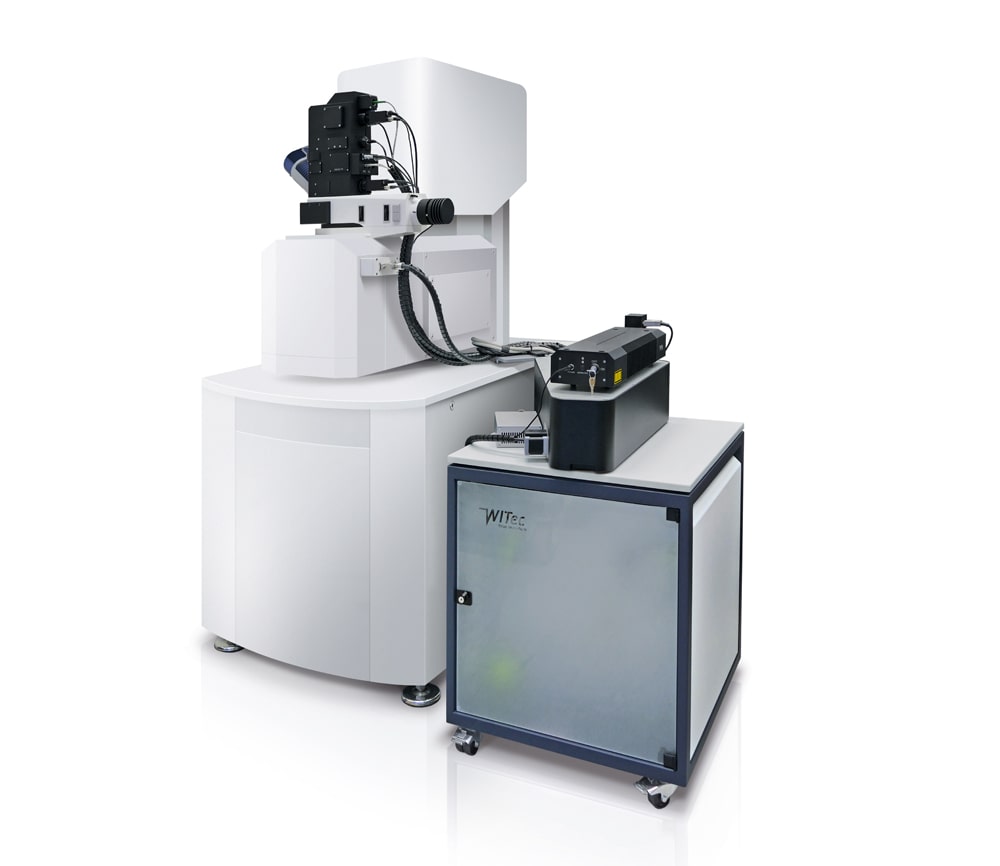
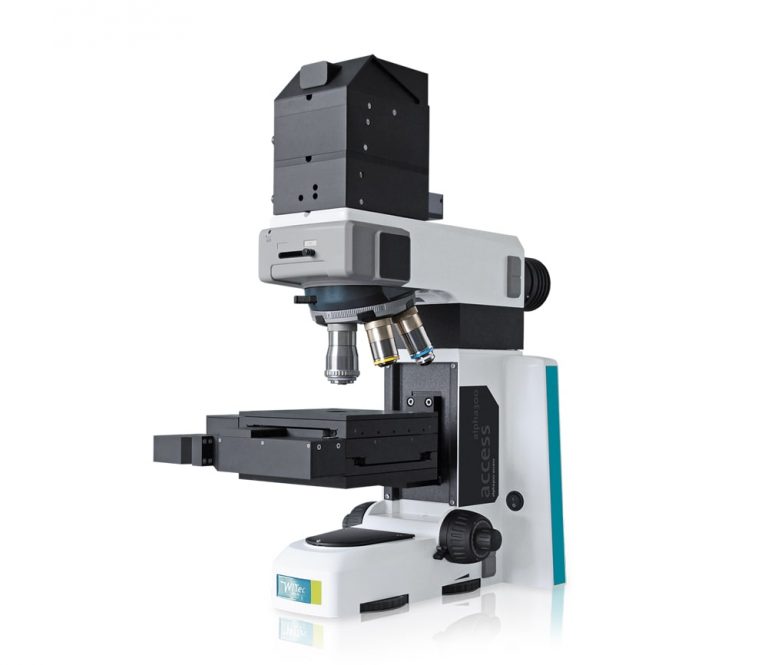
RISE Raman-SEM Microscope – Integrated SEM and Confocal Raman Imaging
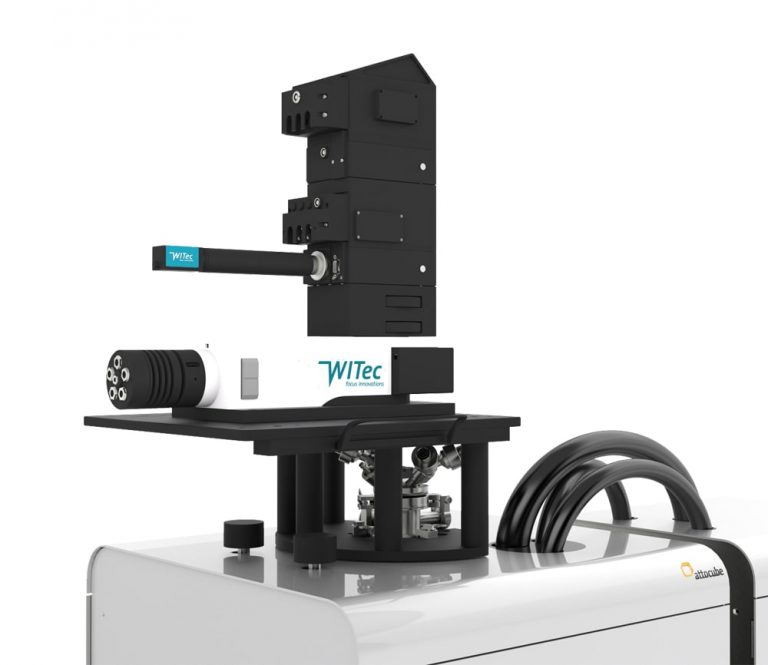
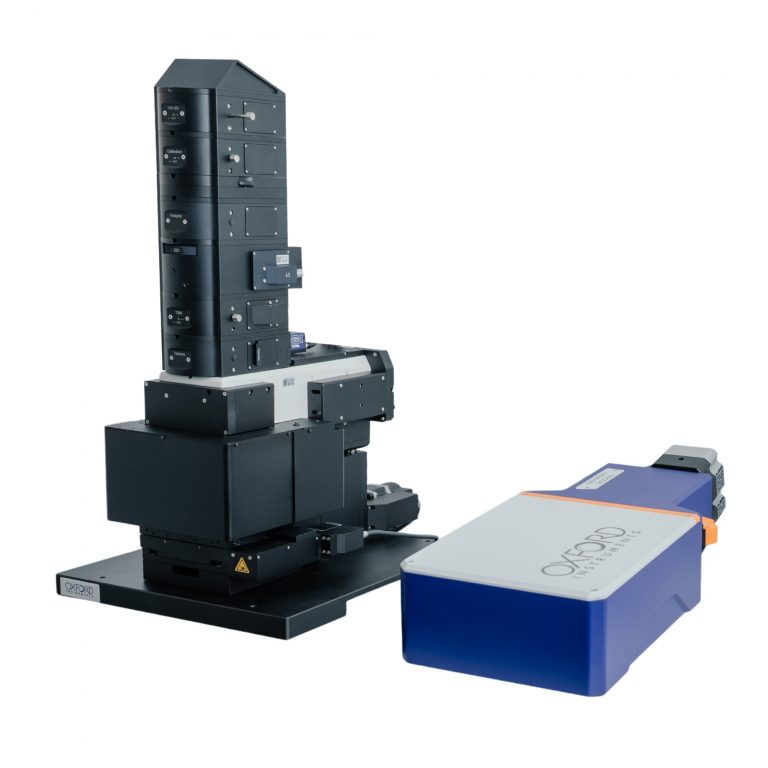
RISE Raman-SEM Microscope from Oxford Instruments is an advanced correlative microscopy solution that integrates scanning electron microscopy and confocal Raman imaging in a single instrument. This powerful combination enables users to visualize surface morphology with SEM while obtaining molecular, chemical and phase information from Raman imaging on the same sample area.
In Vietnam, 2H Instruments supports Oxford Instruments Raman solutions for research laboratories, universities, core facilities and industrial R&D teams that require high-performance correlative analysis for materials science, semiconductors, polymers, nanotechnology, geoscience, life science and energy materials.
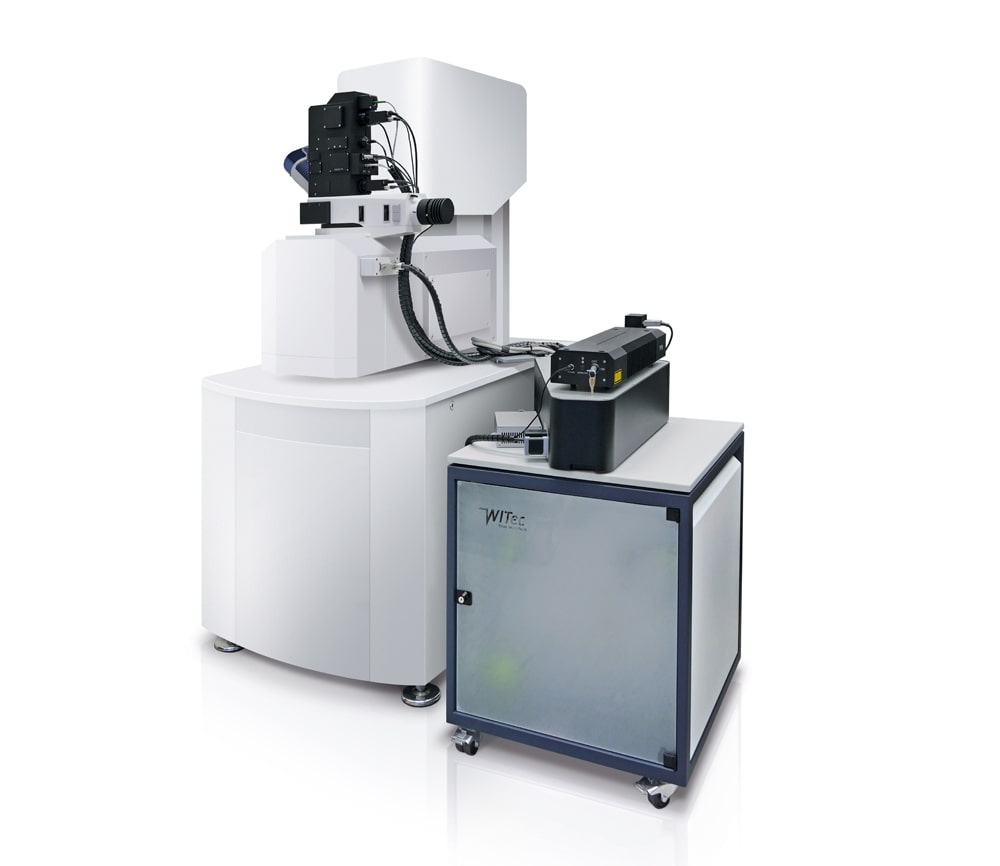
What is RISE Raman-SEM Microscopy?

RISE stands for Raman Imaging and Scanning Electron Microscopy. It is a correlative microscopy technique that brings together two highly complementary analytical methods: SEM for high-resolution surface morphology and Raman imaging for molecular composition, phase distribution, crystallinity, stress, carbon structure and chemical identification.
Instead of transferring a sample between separate SEM and Raman instruments and manually correlating
the data afterwards, RISE provides an integrated workflow. The sample is automatically transferred between the SEM and Raman measuring positions within the SEM vacuum chamber, improving ease of use, positional correlation and data reliability.
Why Combine Raman Imaging with SEM?

SEM is widely used to investigate surface morphology, particle size, microstructure, defects and topographical features. However, SEM alone does not always provide direct molecular or phase information.
Raman microscopy, on the other hand, is a non-destructive spectroscopic technique that reveals chemical composition, molecular structure, crystallinity, stress and phase distribution.
By integrating these two methods, RISE enables researchers to answer two critical questions at the same time:
“What does the sample look like?” and “What is it made of at this exact location?”.
This makes RISE highly valuable for advanced materials, semiconductors, thin films, polymers, 2D materials, batteries, catalysts, pharmaceuticals and complex geological samples.
Key Features of the RISE Raman-SEM Microscope

- Fully integrated SEM and confocal Raman microscopy:
combines high-resolution surface imaging with chemical and molecular analysis in one system. - Fast switching between SEM and Raman measurements:
simplifies the correlative workflow and reduces manual handling. - Automated sample transfer inside the SEM vacuum chamber:
improves positional accuracy compared with moving samples between separate instruments. - Integrated software interface:
supports measurement control, data correlation and Raman-SEM image overlay in a user-friendly workflow. - No compromise in SEM or Raman imaging performance:
users benefit from the strengths of both techniques within a single platform. - Powerful image overlay:
combines SEM images with color-coded Raman maps to reveal the relationship between microstructure and chemical distribution.
Confocal Raman Imaging Performance
RISE is built on Oxford Instruments’ high-performance confocal Raman imaging technology. It enables hyperspectral Raman image generation, where every image pixel contains a complete Raman spectrum. This allows users to visualize the sample and extract chemical information from specific locations across the mapped area.
- High-speed, high-sensitivity and high-resolution confocal Raman imaging.
- Hyperspectral Raman maps with a complete Raman spectrum at every image pixel.
- Excellent diffraction-limited lateral resolution of approximately 200–300 nm.
- Outstanding depth resolution for 3D imaging and depth profiling.
- Ultra-high-throughput lens-based spectroscopic system for high sensitivity and spectral performance.
- Ultra-fast Raman imaging option with integration times down to 0.76 ms per spectrum.
- Non-destructive imaging technique, often requiring no staining or sample fixation.
Typical Applications of RISE Raman-SEM
1. Materials Science and Advanced Materials
RISE helps researchers understand the link between microstructure and chemical composition in composites, ceramics, coated metals, thin films, porous materials, catalysts and functional materials. SEM provides surface morphology, while Raman maps reveal phase distribution, molecular composition and crystallinity.
2. Semiconductors, Thin Films and Photonic Materials
For semiconductor research, RISE supports the analysis of GaAs, silicon, compound semiconductors, coatings, surface defects, process residues and stress distribution. Raman-SEM overlay is especially useful when identifying the exact location of defects, residues or non-uniform regions on wafers and devices.
3. Nano-Carbon and 2D Materials
Raman spectroscopy is a key technique for graphene, carbon nanotubes, MoS2 and other 2D materials. When combined with SEM, RISE enables researchers to correlate morphology, layer number, defects, phase distribution and material uniformity within the same field of view.
4. Polymers and Composite Materials
RISE can distinguish different polymer phases in blends and composites, such as the distribution of polystyrene and polymethyl methacrylate in PMMA-PS systems. This supports studies of phase compatibility, additive dispersion, surface defects, coatings and material aging.
5. Geoscience, Minerals and Natural Materials
For geological samples, RISE can combine SEM morphology, elemental information from EDS when integrated, and molecular compound information from Raman imaging. This makes it useful for mineral identification, phase mapping and microstructural analysis of rocks, ores, sediments and complex geological materials.
6. Life Science, Pharmaceuticals and Cosmetics
Because Raman imaging is non-destructive in many applications and often does not require staining, Raman-SEM can support the study of biological tissues, active ingredient distribution, pharmaceutical particles, biomaterials, implants, cosmetics and structured dispersions.
7. Batteries, Fuel Cells and Energy Materials
In energy storage and conversion research, RISE can be used to investigate electrodes, catalysts, carbon materials, coatings, reaction by-products and surface changes after operation or cycling.
RISE Application Examples
- Brain tissue: Raman-SEM overlay can distinguish different tissue regions such as white and gray matter.
- GaAs semiconductor sample: Raman-SEM mapping can identify the substrate, GaAs region and production residues.
- PMMA-PS polymer blend: Raman imaging reveals the distribution of polystyrene and polymethyl methacrylate.
- Geological samples: SEM, EDS and Raman data can be combined to correlate elemental, structural and molecular information.
Who Should Consider RISE?
RISE is ideal for laboratories that need correlative multi-technique analysis at the same sample location, including:
- Materials characterization centers, core facilities and shared analytical laboratories.
- Universities, research institutes and advanced materials R&D groups.
- Semiconductor, thin film, 2D materials and nanotechnology laboratories.
- Polymer, composite, coating and functional materials research teams.
- Geoscience, mineralogy, environmental, pharmaceutical and life science laboratories.
- Industrial R&D teams requiring integrated morphology, structure and chemical analysis.
Why Choose RISE with 2H Instruments?
As a distributor and local support partner for Oxford Instruments Raman solutions in Vietnam, 2H Instruments works with customers from application consultation and configuration selection to sample discussion, user training and after-sales technical support.
- Consultation on suitable RISE configurations for your sample types and research goals.
- Support in defining technical requirements for Raman-SEM investment projects.
- Connection with Oxford Instruments specialists for advanced applications in semiconductors,
2D materials, polymers, batteries and geoscience. - Training support for instrument operation, Raman-SEM data interpretation and workflow optimization.
- Supply of related accessories, consumables and technical services for Oxford Instruments Raman systems.
Frequently Asked Questions about RISE Raman-SEM
Does RISE replace a standalone SEM or Raman microscope?
RISE goes beyond replacing a single instrument. It creates a stronger correlative workflow where SEM and Raman imaging complement each other on the same sample area.
Is Raman-SEM analysis destructive?
Raman imaging is non-destructive in many applications and often requires no staining or sample fixation. However, laser wavelength, laser power and acquisition time should be optimized for sensitive samples to avoid thermal effects or material changes.
Is RISE suitable for semiconductors and 2D materials?
Yes. RISE is highly useful when researchers need to correlate surface morphology, defects, residues or microstructure with Raman information such as phase, stress, layer number, crystallinity or chemical composition.
Can RISE be combined with EDS?
Depending on the SEM configuration and application requirements, RISE can be used in workflows combining Raman, SEM and EDS to provide molecular, structural and elemental information.
Contact 2H Instruments for RISE Raman-SEM in Vietnam
If your laboratory is looking for a Raman-SEM microscope for correlative analysis of materials, semiconductors, polymers, 2D materials, geoscience, pharmaceuticals or life science samples, RISE from Oxford Instruments is a powerful solution to consider.
Contact 2H Instruments for application consultation, configuration discussion, sample evaluation and quotation support for the RISE Raman-SEM microscope in Vietnam.



Reviews
There are no reviews yet.