
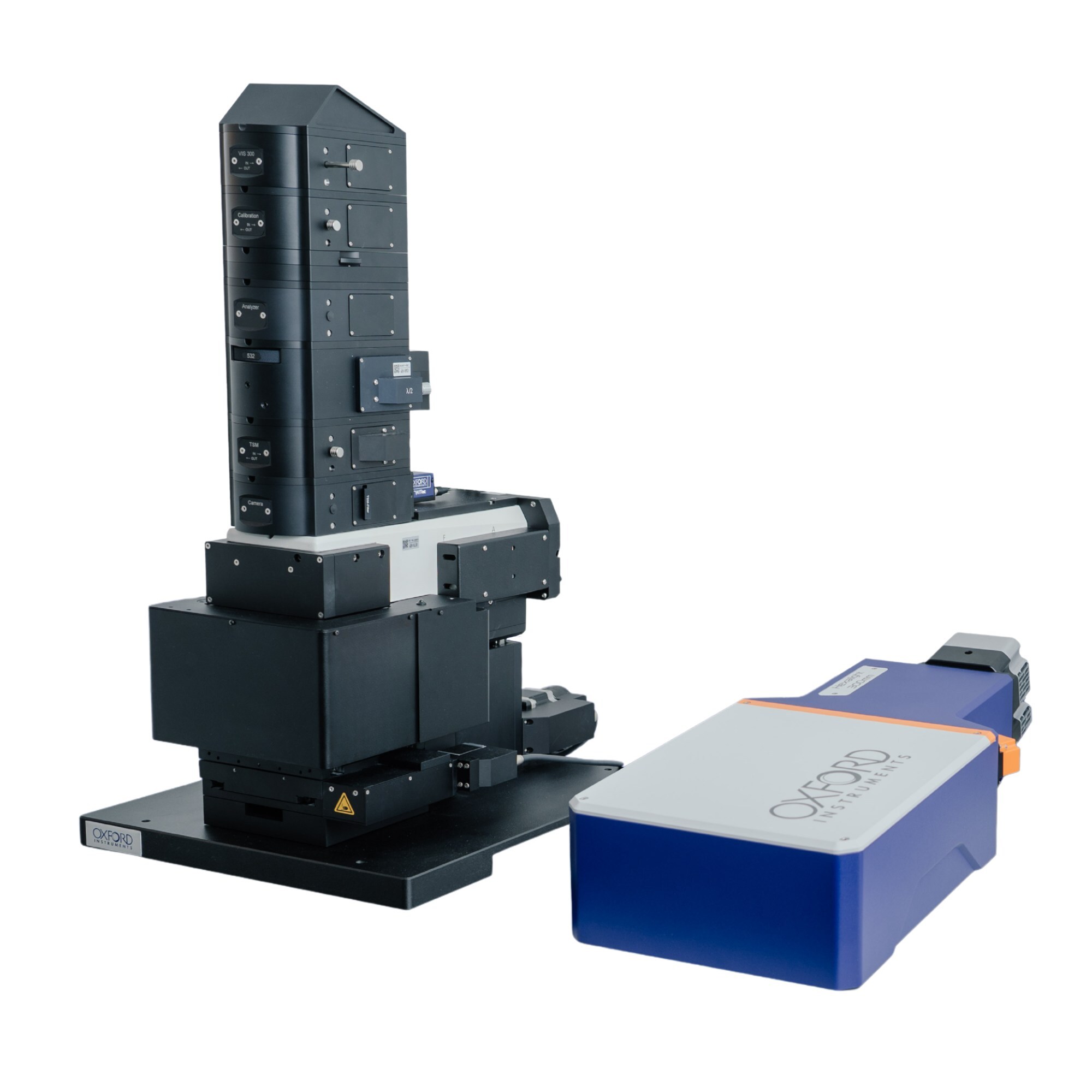
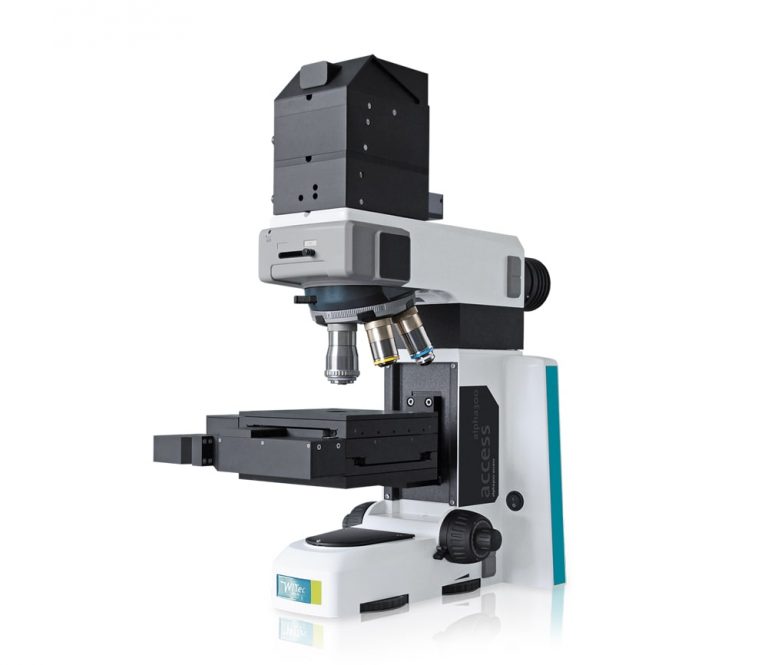
witec360 Raman Microscope – High-Performance Confocal Raman Imaging Platform
witec360 from Oxford Instruments is a next-generation confocal Raman imaging microscope designed to meet the growing demand for chemical, structural and nanoscale analysis in academic and industrial research. As the successor to the pioneering alpha300 series, witec360 sets new standards in performance, broadband capability, modularity and correlative microscopy.
The system is ideal for research laboratories, universities, institutes, core facilities and industrial R&D teams that require a powerful, flexible and future-proof Raman platform. It supports point spectroscopy, 2D Raman mapping, 3D Raman imaging, line scans, depth profiling and time-resolved measurements in a single configurable system.
In Vietnam, 2H Instruments supports Oxford Instruments Raman solutions, helping customers
select the right witec360 configuration for their applications, including lasers, spectrometers, detectors,
automation modules, software and correlative imaging options.
What is witec360?
witec360 is a confocal Raman microscope platform for Raman spectroscopy, 2D Raman mapping, 3D Raman imaging, line scanning, depth profiling and time-dependent measurements. Each pixel in a Raman map can contain a complete Raman spectrum, allowing users to extract chemical, structural, phase, strain or compositional information at specific sample locations.
The main strength of witec360 is its modular architecture. Users can configure the system for current experimental requirements and expand it later with additional lasers, spectrometers, stages, automation, polarization modules, TrueSurface, AFM, SNOM, photoluminescence, fluorescence, TCSPC, SHG/THG or other correlative microscopy techniques as research needs evolve.
Why Choose witec360 for Raman Imaging?

Modern research often requires more than a single Raman spectrum. Researchers need to visualize chemical composition, structure and material properties across large areas or in three dimensions. witec360 addresses this need with optimized optics, high-performance spectroscopy, intuitive software and advanced automation that accelerate data acquisition, improve reproducibility and simplify daily operation.
By integrating correlative microscopy techniques, witec360 enables users to connect Raman information with morphology, topography, mechanical properties, photoluminescence, optical structure or data from complementary techniques. This is especially valuable for advanced materials, semiconductors, polymers, 2D materials, pharmaceuticals and complex biological samples.
Key Benefits of witec360
- Research-grade results:
optimized optics throughout the beam path deliver high speed, sensitivity and resolution for demanding R&D. - Exceptional versatility:
broadband capabilities and flexible configurations support diverse samples and application areas. - Comprehensive insight:
correlative imaging options connect chemical, structural, morphological and functional information. - Modular and scalable design:
configure the system for today’s requirements and upgrade it as research needs grow. - Intelligent automation:
simplifies operation for newcomers while supporting advanced workflows for Raman experts. - Consistency and transparency:
multi-user management, internal calibration, automated reporting and guided analysis improve reliability.
Advanced Raman Measurement Modes

witec360 supports a wide range of Raman measurement modes, from simple point spectroscopy to 3D imaging
and time-dependent process monitoring. This makes it suitable for fundamental research, complex sample
analysis and R&D quality control.
- Point-by-point spectral acquisition:
precise Raman spectra at individual sample locations. - 2D area scans:
Raman maps for visualizing composition, phase distribution, strain or defects. - 3D Raman imaging:
layer-by-layer visualization of internal sample structures, useful for polymers, cells, multilayers and dispersions. - Line scans and depth profiling:
analysis of composition or structure along defined axes or through sample depth. - Time-resolved measurements:
monitoring reactions, material changes, diffusion processes or time-dependent behavior.
Class-Leading Raman Imaging Performance

witec360 is optimized for high signal transmission, stability and broadband spectral flexibility. It is well suited for applications involving weak signals, sensitive samples, fast imaging or high-resolution spectral analysis.
- Broadband range of 350–1100 nm within the same core system.
- Extended wavelength options from UV 266 nm to NIR 1064 nm.
- Diffraction-limited lateral resolution below 300 nm, depending on excitation wavelength.
- Depth resolution below 950 nm, depending on excitation wavelength.
- Spectral resolution down to 0.1 cm-1 relative wavenumbers at 633 nm excitation.
- Ultra-fast Raman imaging with acquisition speeds below 1 ms per spectrum in suitable configurations.
- Hexalight spectrometer with lens-based optics and six grating positions for throughput and spectral flexibility.
Hexalight – The Core of witec360 Performance

Hexalight is the central spectroscopic engine of the witec360 platform. Its lens-based
optical design, high light throughput and multiple grating positions help balance sensitivity, spectral
resolution and wavelength flexibility. This makes witec360 suitable for routine material analysis as well
as advanced Raman imaging research.
Modular Architecture and Configuration Flexibility
witec360 is built as a flexible platform that can be configured for dedicated single-application workflows,
advanced academic research or multi-user core facility environments.
- Upright or inverted microscope bases:
suitable for solids, bulky samples, liquids, biological specimens or measurements from below. - Full automation:
streamlines repetitive workflows and improves reproducibility. - Full-wafer access:
enables large-area wafer analysis for semiconductor applications. - Flexible lasers and spectrometers:
match excitation wavelength, spectral performance and detector configuration to the sample. - Sample positioning and handling:
motorized and piezo-driven stages support accurate measurement and mapping. - Expandable software and accessories:
allow staged upgrades as laboratory needs evolve.
Correlative Microscopy Capabilities

One of the major strengths of witec360 is its ability to integrate correlative microscopy techniques.
Users can analyze the same sample area with multiple methods, while the software supports control,
image overlay and data correlation in a streamlined workflow.
- White-light microscopy: locate regions of interest and visualize samples with high-quality optical images.
- AFM: add topography, adhesion, stiffness and nanoscale mechanical information.
- TrueSurface: maintain focus during Raman measurements on curved, tilted or rough surfaces.
- SNOM: extend optical imaging beyond the diffraction limit, with resolution down to approximately 60 nm.
- Fluorescence microscopy: complement Raman data in life science and fluorescence-labelled samples.
- Photoluminescence imaging: analyze optoelectronic properties in semiconductors and luminescent materials.
- TCSPC, TLM and FLIM: enable time-resolved luminescence studies in optoelectronics and life science.
- SHG/THG: investigate non-centrosymmetric structures, 2D materials and label-free biological samples.
- SEM/RISE: correlate Raman information with nano-structural, crystallographic and elemental insights.
- Antibunching: support identification of single-photon emitters for quantum research.
Intelligent Automation for Every User
witec360 is designed for both Raman newcomers and experienced imaging specialists. Automation options reduce setup time, improve repeatability and minimize manual intervention in routine and advanced workflows.
- AutoBeam:
one-click laser beam path alignment, supporting multiple lasers and remote operation. - TrueCal:
automated calibration routines that keep the system spectrally aligned and ready for accurate measurement. - TrueComfort:
automates daily operations such as Köhler illumination, bright-field/Raman switching and objective turret rotation. - TrueSurface:
actively maintains focus during measurements on non-flat surfaces. - Motorized laser coupler:
software-controlled switching between multiple laser wavelengths from UV to NIR. - TruePower:
absolute laser power control for sensitive samples and power-dependent experiments. - Motorized polarization modules:
automated polarizer and analyzer adjustment for polarization-sensitive Raman studies. - Motorized and piezo-driven stages:
enable precise positioning, large-area scanning, zoom-in workflows and revisiting defined positions.
Raman Data Processing and Analysis Software
witec360 software supports the full workflow from measurement control and data acquisition to spectral processing, Raman image generation and component analysis. This is especially valuable for multi-user labs that need an interface that is easy to learn while remaining powerful for expert users.
- Analysis Wizard:
guided workflows that simplify data analysis and reduce training time. - TrueComponent analysis:
automatically identifies and differentiates sample components in Raman images. - TrueMatch:
matches measured spectra to known molecules using Raman spectral databases. - Automated reporting:
supports documentation, transparency and reproducible analysis routines.
Typical Applications of witec360
1. Materials Science
witec360 supports composition mapping, phase analysis, strain analysis, defect mapping, 3D structure visualization and material distribution studies in polymers, composites, geological samples, ceramics, nanomaterials, catalysts, coatings and functional materials.
2. Semiconductors and Optoelectronics
With high-resolution Raman and photoluminescence imaging, witec360 is suitable for semiconductor metrology, stress field mapping, defect characterization, bandgap analysis, wafer mapping, SiC, GaN, compound semiconductors and optoelectronic materials.
3. Life Science
Raman imaging can be non-destructive and label-free in many life science applications. witec360 can support studies of cellular structures, metabolism, drug uptake, lipid/protein distribution and biological processes in 2D or 3D.
4. Pharmaceutics and Cosmetics
In pharmaceutical R&D, witec360 supports API mapping, excipient distribution, polymorph analysis, coatings, formulation uniformity, stability and dissolution-related studies. In cosmetics, it can generate 3D images of emulsions, dispersed particles and multiphase structures.
5. 2D Materials, Nano-Carbon and Quantum Materials
Raman spectroscopy is essential for graphene, carbon nanotubes, MoS2, WSe2, hBN and other 2D materials. witec360 supports analysis of layer number, defects, strain, crystal orientation, photoluminescence and correlation with AFM, SNOM, SHG or PL.
Who Should Consider witec360?
- Materials characterization centers, core facilities and multi-user laboratories.
- Universities, research institutes and advanced materials or nanotechnology groups.
- Semiconductor, wafer, SiC, GaN, photonics and optoelectronic R&D laboratories.
- Polymer, coating, composite, catalyst and functional materials research teams.
- Pharmaceutical, cosmetics, cell biology and biomaterials laboratories.
- Industrial R&D teams requiring a scalable Raman system with automation and reproducible workflows.
Why Choose witec360 with 2H Instruments?
2H Instruments supports customers in Vietnam in selecting a witec360 configuration that matches their research goals, budget and long-term expansion needs.
- Consultation on upright/inverted configuration, lasers, spectrometers, detectors and stages.
- Automation configuration support for multi-user laboratories and repetitive R&D workflows.
- Guidance on optional modules such as TrueSurface, AFM, SNOM, PL, TCSPC, SHG/THG, polarization and SEM/RISE.
- Connection with Oxford Instruments specialists for materials, semiconductor, pharmaceutical and life science applications.
- Training support for operation, Raman imaging data interpretation and measurement optimization.
- Supply of accessories, upgrades, maintenance and technical services for Oxford Instruments Raman systems.
Frequently Asked Questions about witec360
How is witec360 different from a standard Raman microscope?
witec360 is not only a point Raman spectrometer. It is a modular confocal Raman imaging platform supporting 2D mapping, 3D imaging, depth profiling, time-dependent measurements, automation and integration with correlative microscopy techniques.
Is witec360 suitable for multi-user laboratories?
Yes. The system supports multi-user management, automation, internal calibration, intuitive workflows and guided analysis tools, making it suitable for both new users and experienced Raman specialists.
Can witec360 be upgraded after installation?
Yes. Its modular design enables future upgrades including lasers, spectrometers, stages, automation, software and correlative imaging modules.
Is witec360 suitable for semiconductor applications?
Yes. witec360 supports stress field mapping, defect analysis, wafer mapping, bandgap studies, SiC, GaN, compound semiconductors and optoelectronic materials. For large-area wafer access, dedicated wafer configurations or the witec360 Semiconductor Edition can be considered.
Contact 2H Instruments for witec360 in Vietnam
If your laboratory is looking for a high-performance confocal Raman imaging microscope with modular architecture, correlative microscopy capability and intelligent automation, witec360 from Oxford Instruments is a powerful solution to consider.
Contact 2H Instruments for configuration consultation, application discussion, specialist support and quotation assistance for witec360 in Vietnam.



Reviews
There are no reviews yet.