
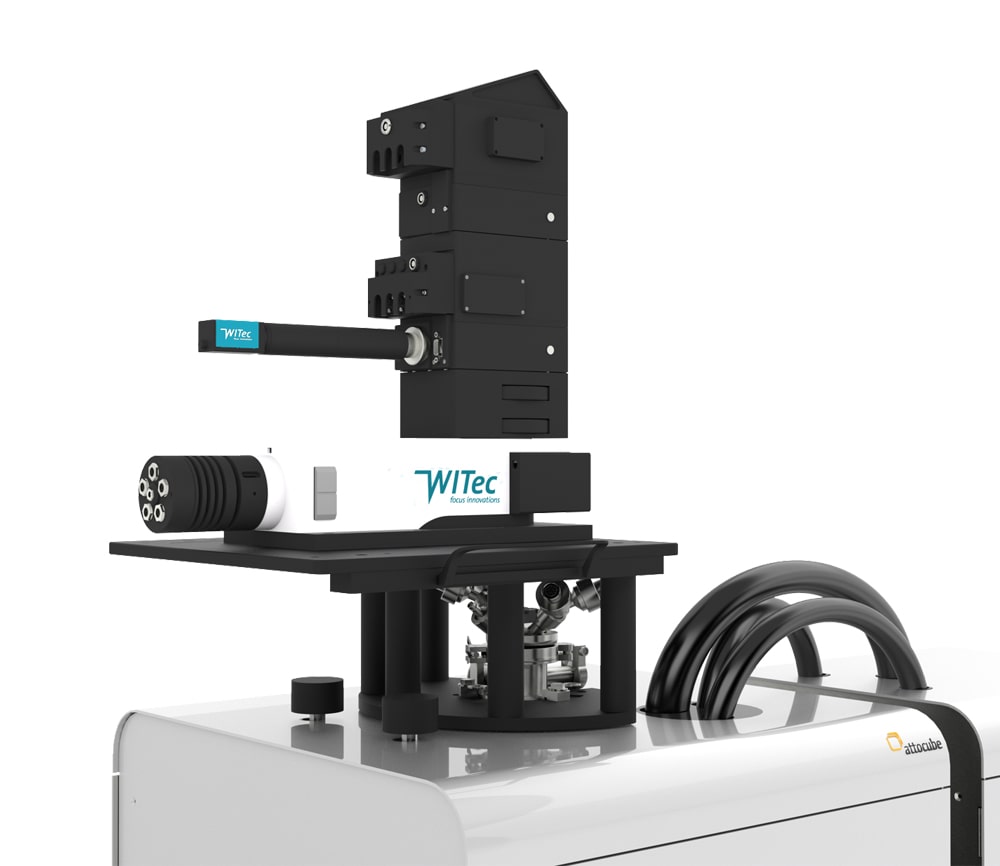
cryoRaman – Cryogenic Raman Imaging Microscope for Advanced Materials Research
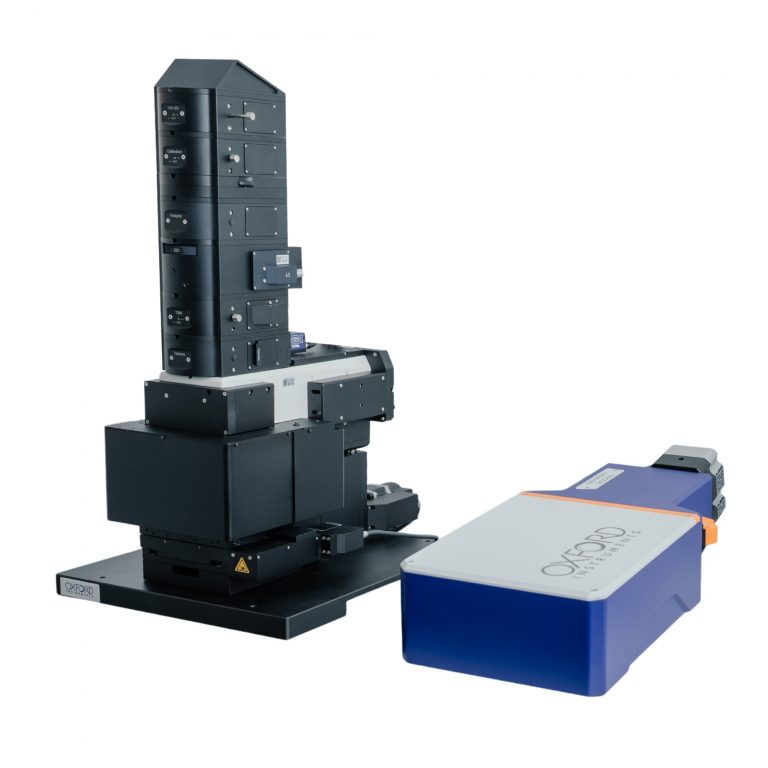
cryoRaman from Oxford Instruments is a 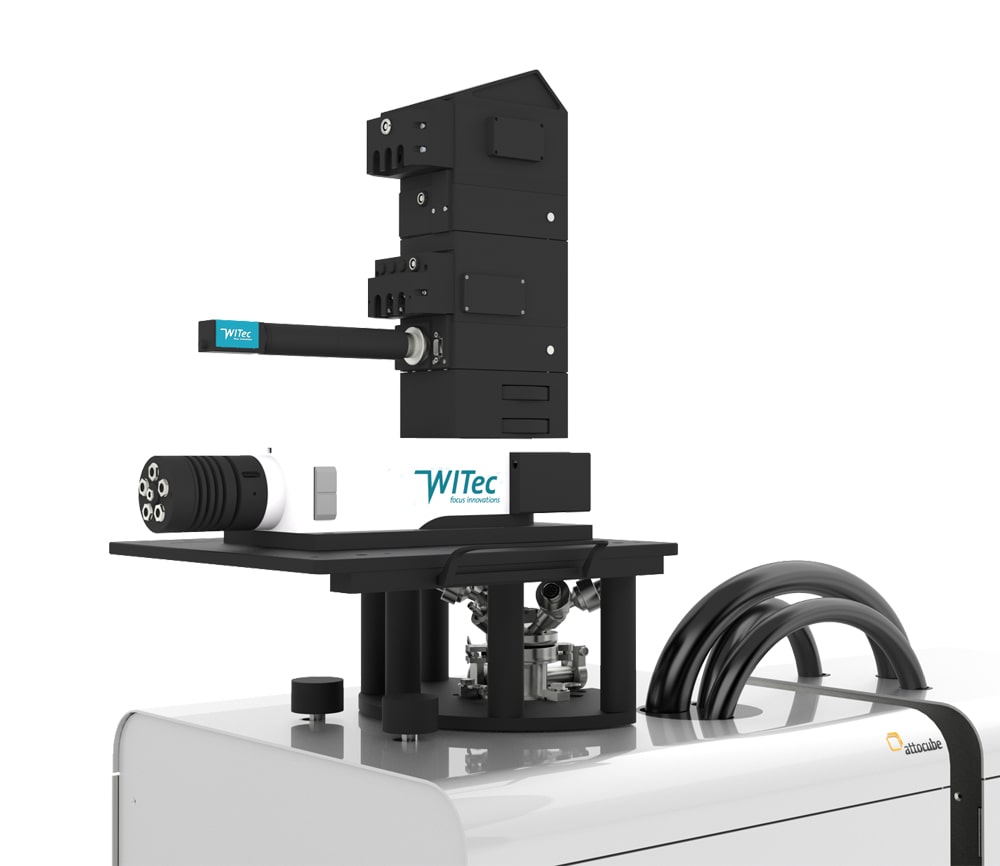 cryogenic Raman imaging microscope designed for researchers who need high-performance Raman measurements at very low temperatures. It combines advanced Raman microscopy with cryostat and nanopositioner technology, enabling the study of materials that reveal new properties when cooled close to absolute zero.
With an operating temperature range from 1.8 K to 300 K, optional high magnetic fields,
polarization control, excitation wavelengths from VIS to NIR and user-friendly data acquisition software, cryoRaman is a powerful platform for research on 2D materials, quantum materials, semiconductors, photonics, nano-carbon materials, energy materials and condensed matter physics.
In Vietnam, 2H Instruments supports Oxford Instruments Raman solutions for universities, research institutes, core facilities and industrial R&D laboratories that require advanced Raman imaging capabilities under cryogenic conditions.
What is cryoRaman?
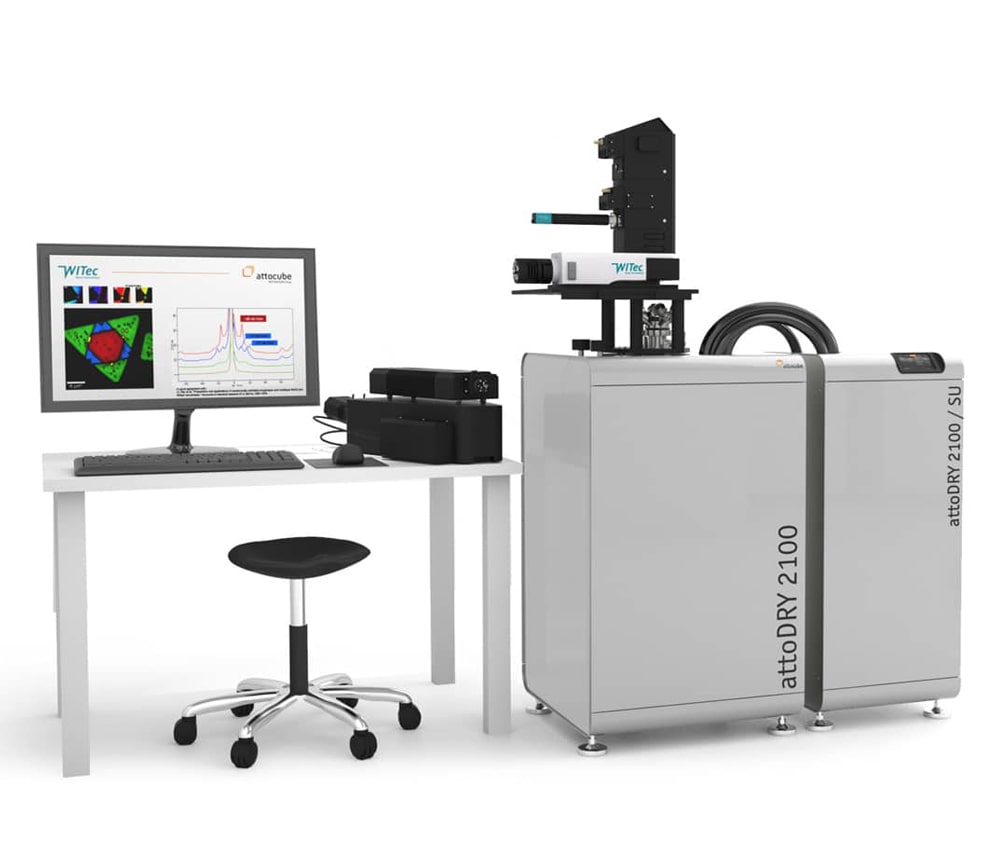
cryoRaman is a Raman microscope optimized for low-temperature measurements. In many advanced materials, especially 2D materials, semiconductors, quantum materials and heterostructures, electronic, phonon, excitonic, photoluminescence and spin-related properties can change significantly as temperature decreases. cryoRaman enables researchers to monitor these changes through Raman spectra, Raman maps and photoluminescence measurements with high spatial resolution.
The system combines Oxford Instruments’ Raman microscopy performance with a low-vibration closed-cycle cryostat, precise low-temperature nanopositioners and cryogenically compatible Raman objectives. This provides a stable and configurable platform for Raman imaging, spectroscopy and PL studies under
cryogenic conditions.
Why Use Raman Imaging at Cryogenic Temperatures?
Raman spectroscopy is a key technique for studying lattice vibrations, phase transitions, strain, layer number in 2D materials, carbon structure, defects and light-matter interactions. When combined with a cryogenic environment, Raman microscopy becomes a powerful tool for studying phenomena that may
be hidden at room temperature due to thermal broadening or thermal noise.
For materials such as graphene, MoS2, WSe2, 2D heterostructures, quantum materials, semiconductor nanostructures and photonic devices, cryoRaman can help investigate Raman peak shifts, intensity changes, mode splitting, polarization effects, temperature-dependent photoluminescence and magnetic-field-dependent material behavior.
Key Features of cryoRaman
- Low-temperature Raman imaging:
supports material studies across an operating temperature range of 1.8 K to 300 K. - Low-vibration closed-cycle cryostat:
supports stable Raman mapping and spectral acquisition under cryogenic conditions. - Precise nanopositioning:
enables accurate and stable sample positioning at low temperatures. - Cryogenically compatible Raman objectives:
optimized for optical and Raman measurements in cryogenic environments. - VIS to NIR excitation:
provides flexibility for a broad range of materials and spectroscopic applications. - High magnetic field options:
configurable with solenoid magnets up to 12 T or vector magnets for field-dependent studies. - Full polarization control:
supports polarization-dependent Raman measurements in both excitation and detection paths. - Software-controlled laser power adjustment:
helps optimize measurement conditions for laser-sensitive or temperature-sensitive samples. - Automated switching from optical microscopy to spectroscopic imaging:
streamlines the measurement workflow. - TCSPC and low-wavenumber Raman options:
extend the system’s capability for time-resolved photoluminescence and low-frequency Raman mode analysis.
Advanced Configuration Options
cryoRaman is designed as a flexible research platform that can be configured for current requirements and extended for emerging scientific challenges. Depending on the application, users can select suitable laser wavelengths, detectors, spectrometers, polarization modules, magnetic field configurations, TCSPC modes, low-wavenumber Raman capability and data analysis software.
- Excitation wavelengths from visible to near-infrared.
- Optimized spectrometers for high sensitivity and spectral resolution.
- Closed-cycle cryostat for low-temperature operation.
- Low-temperature nanopositioners for accurate sample positioning.
- Cryogenic Raman objectives designed for low-temperature optical access.
- Solenoid or vector magnet options.
- Polarization control in excitation and detection.
- Temperature- and field-dependent photoluminescence measurements.
- TCSPC modes for time-correlated single photon counting.
- Low-wavenumber Raman for low-frequency vibrational modes in crystals and 2D materials.
Typical Applications of cryoRaman
1. 2D Materials and Heterostructures
cryoRaman is highly suitable for the study of graphene, MoS2, WSe2, WS2, hBN and van der Waals heterostructures. It helps researchers identify layer number, orientation,
composition, defects, strain, interlayer interactions and temperature-dependent Raman or PL behavior.
2. Quantum Materials and Condensed Matter Physics
Many quantum materials reveal their most important properties only at low temperatures or under high magnetic fields. cryoRaman supports research on phase transitions, phonons, excitons, spin-related effects, low-frequency modes and the spectroscopic response of materials to temperature, polarization and magnetic fields.
3. Semiconductors and Optoelectronics
In semiconductor research, cryoRaman can be used to analyze strain, crystal quality, defects, heterostructures, quantum wells, quantum dots and optoelectronic devices. Combining Raman and temperature-dependent photoluminescence provides valuable insight into the electronic and optical properties of materials.
4. Nano-Carbon and Advanced Carbon Materials
Raman spectroscopy is a standard technique for analyzing graphene, carbon nanotubes, carbon black, graphite, diamond-like carbon and related materials. Low-temperature Raman measurements can provide additional insight into vibrational modes, defects, electron-phonon interactions and environmental effects.
5. Energy Materials
cryoRaman can support research on electrode materials, catalysts, photovoltaic semiconductors, energy storage materials and temperature-sensitive functional materials. Temperature-dependent Raman spectra help clarify phase changes, structural evolution and interaction mechanisms.
6. Temperature-Dependent Photoluminescence
The system can be configured for photoluminescence studies to monitor PL peak shifts as a function of temperature. This is especially useful for WSe2, MoS2, semiconductor nanostructures and optoelectronic materials where excitonic behavior and band structure are critical.
cryoRaman Application Examples

- WSe2 at 120 K:
Raman images can distinguish areas with one, two and three layers based on Raman spectra. - MoS2/WSe2 heterostructure at 2 K:
Raman imaging can reveal differences in layer number, composition and orientation. - MoS2 under magnetic field and polarization control:
polarization- and field-dependent Raman imaging can be used to study changes in vibrational mode intensity. - Temperature-dependent PL of WSe2:
PL spectra and images recorded at different temperatures can show temperature-dependent peak shifts.
Who Should Consider cryoRaman?
cryoRaman is ideal for research groups that require Raman imaging and spectroscopy at low temperatures,
especially:
- 2D materials, van der Waals heterostructures and nano-carbon laboratories.
- Quantum materials, condensed matter physics and solid-state physics research groups.
- Semiconductor, photonics and nano-device R&D laboratories.
- Energy materials, catalysts and functional materials research teams.
- Core facilities requiring a flexible cryogenic Raman platform for multiple user groups.
- Universities and research institutes seeking advanced Raman instrumentation for high-impact publications.
Why Choose cryoRaman with 2H Instruments?
As a distributor and local support partner for Oxford Instruments Raman solutions in Vietnam, 2H Instruments helps customers define the right cryoRaman configuration based on research goals, sample types, temperature requirements, magnetic field needs and analytical workflow.
- Consultation on cryostat, laser, spectrometer, detector and software configurations.
- Support in defining technical specifications for low-temperature Raman investment projects.
- Connection with Oxford Instruments specialists for 2D materials, semiconductors, quantum materials and photonics applications.
- Training support for operation, measurement optimization and Raman/PL data interpretation.
- Technical support, maintenance and supply of accessories for Oxford Instruments Raman systems.
Frequently Asked Questions about cryoRaman
How is cryoRaman different from a standard Raman microscope?
A standard Raman microscope is mainly used at ambient or room temperature conditions. cryoRaman is designed for low-temperature Raman imaging and integrates a cryostat, nanopositioners, cryogenic Raman objectives and optional magnetic field, polarization, PL and TCSPC capabilities.
Is cryoRaman suitable for 2D materials?
Yes. 2D materials are one of the key application areas for cryoRaman, including graphene, MoS2, WSe2, hBN and 2D heterostructures where layer number, orientation, defects, PL and temperature-dependent behavior are important.
Can cryoRaman measure photoluminescence?
Yes. The system can be configured for photoluminescence studies, including temperature-dependent PL measurements for semiconductors, 2D materials and optoelectronic structures.
Can measurements be performed under high magnetic fields?
Depending on configuration, cryoRaman can be equipped with solenoid magnets up to 12 T or vector magnets for magnetic-field-dependent Raman and PL studies.
Contact 2H Instruments for cryoRaman in Vietnam
If your laboratory is looking for a cryogenic Raman imaging microscope for research on 2D materials, quantum materials, semiconductors, photonics, nano-carbon or energy materials, cryoRaman from Oxford Instruments is a powerful solution to consider.
Contact 2H Instruments for configuration consultation, application discussion, specialist support and quotation assistance for cryoRaman in Vietnam.



Reviews
There are no reviews yet.